


54% Was Enough – How DISC Self-Awareness Helps You Perform at Your Best
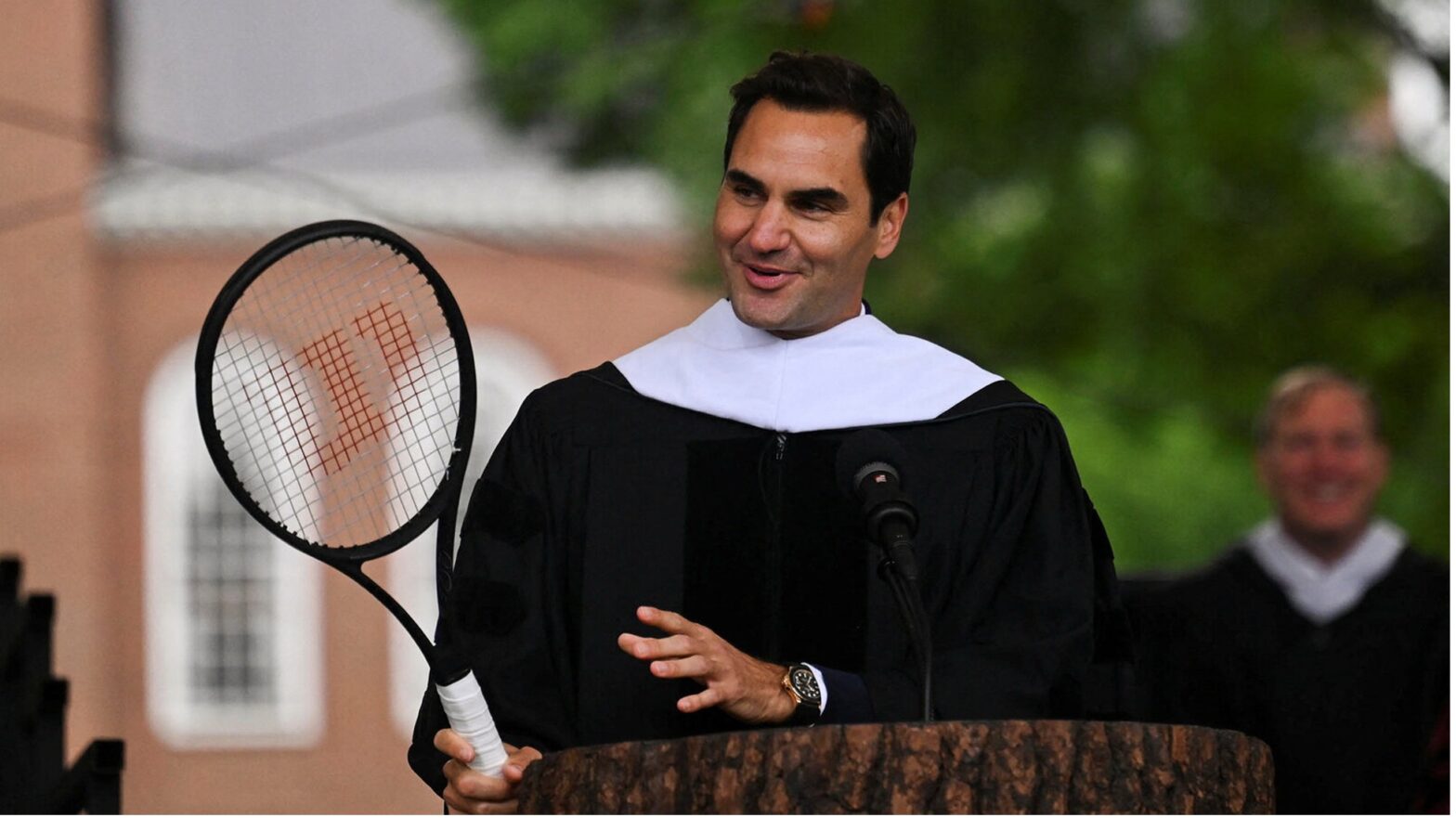
As graduation season arrives, I’m reminded of the 2024 Dartmouth commencement address, where former professional tennis player, Roger Federer, shared the statistic that he won only 54% of the points he played across his career. Not 80%. Not 90%. Just slightly more than half. And yet, by nearly every measure, he is regarded as the greatest tennis player who ever lived.
Most of us have been conditioned to believe that excellence looks like ease. We have been told that some are just naturals and that the best performers rarely struggle, rarely stumble, and always seem in control. Federer’s career is a quiet argument against that idea.
Success, at the highest level, is not about perfection. It’s about something harder to see and harder to build. It’s about self-awareness and knowing that we are not perfect and cannot dwell on the past. As a former collegiate tennis player, I remind my kids of this all the time by asking, “What’s the most important point?” and they have learned to respond with, “the next one.”
Pressure Reveals What Awareness Should Have Already Told You
Every one of us has a default setting, a set of instincts that kick in when stakes are high, time is short, or tension is in the air. Some people push harder. Some people smooth things over. Some go quiet. Some retreat deep into the data.
None of those responses are wrong. But without awareness, they are merely reactions. And reactions, however natural they feel, are not always the “right” move in that moment.
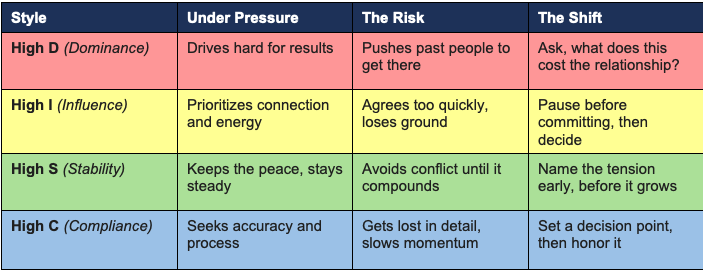
What separates consistent performers is self-awareness. When we understand ourselves, how we’re wired, what we default to, and where we tend to overreach, we can use that understanding as a strength, flexing our natural behaviors rather than being driven by them. Self-aware people have done the work to know how their style shows up under pressure, and they are aware of what it can cost them when left unchecked.
What DISC Reveals
DISC names our preferred behavioral styles, not our weaknesses. It enables us to understand our natural tendencies, and we can flex once we really know ourselves.
Effortless Is a Myth
Federer was the first to admit it: what looked effortless on the court, was built. His shots were built through discipline, repetition, and an almost stubborn commitment to self-awareness. What looked effortless was, in fact, the result of years of deliberate work.
Developing awareness of your own behavioral style works the same way. It doesn’t arrive through reading about it once in a report. It comes from observing how you show up in real situations. I say in all of my training workshops: Be Curious! Reflect later, especially after an uncomfortable conversation, or after a stressful negotiation. Reflect honestly on what worked and what didn’t. Write down your observations…you may see a pattern. Our blind spots are the areas where we can make the most impactful improvements. Practicing different responses does not turn you into someone else, instead it gives you more range.
It’s an important distinction, knowing that the goal is not to suppress your natural style, but rather, to stop being controlled by it. A high D who learns to slow down at the right moment doesn’t become less decisive, they become more effective. A high S who learns to name conflict early doesn’t become aggressive, they become someone people can actually rely on through tough times.
Done with intention, that kind of flexibility becomes a professional strength. Attempted without self-awareness to back it up, it’s exhausting and leads to burnout rather than growth. The foundation must come first.
“The goal isn’t to suppress your natural style. It’s to stop being controlled by it.”
One Question Worth Sitting With
Take 60 seconds before you move on:
Think about a recent moment (a conversation, a decision, an interaction) where your instincts took over and things didn’t land the way you intended. I am no stranger to this. That feeling of “Oh man, I wish I could go back and do it differently.”
Which of your natural tendencies were most active? Did you push when the moment called for patience? Did you step back when you needed to step forward? Did you avoid saying something that needed to be said out loud? Did you get so absorbed in the details that you lost the thread of the person in front of you?
You don’t have to answer out loud…but it’s worth knowing. Because that’s exactly where the work starts and where, over time, the real advantage is built.
Ready to Do the Work?
Self-awareness is where it starts but this is most powerful when it becomes a shared language across a team. When people understand not just their own style but the styles of the people around them, communication gets clearer, tension drops, and collaboration actually works.
If you’re curious about your own behavioral style, a DISC assessment is a great place to begin. It takes about 15 minutes and gives you a concrete picture of how you’re wired, and where your tendencies might be working against you without you realizing it.
If you lead a team that could use a stronger foundation for communication and collaboration, our Building with Style DISC Workshop was designed exactly for that. I would love to be part of your team’s growth. I’m happy to talk through what would be the right fit for you or your team.
Understanding yourself is a competitive advantage. Sharing that understanding with your team multiplies it.
For any of you celebrating a graduation yourself or of a close friend or family member, Congratulations & Best Wishes for the next chapter in life!!!
~ Louisa

Louisa brings a fresh and energetic approach to DISC training, combining her passion for people with the collaborative methods of OrgMetrics. As a Certified DISC Trainer, she helps construction project teams understand communication styles, strengthen relationships, and work together more effectively. Louisa’s approachable style makes DISC accessible, engaging, and directly relevant to the real-world challenges teams face. She is based in the Livermore, CA, where she enjoys coaching youth sports, volunteering at her children’s schools, and spending time with family.
For more information, please contact Louisa Garrett, louisagarrett@orgmet.com / (702) 466-8722 (cell) or OrgMetrics robreaugh@orgmet.com / (925) 449-8300.