

Partnering Mailbag – Selecting a Partnering Facilitator
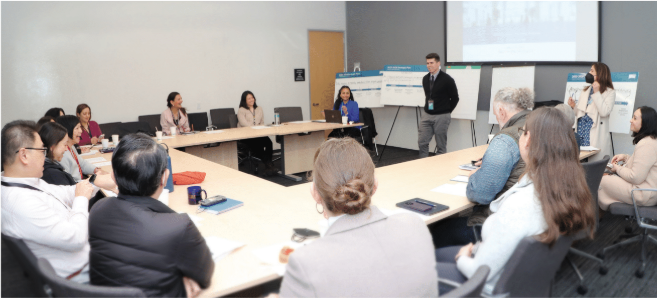
In May I led a Partnering Fundamentals Training on behalf of the San Francisco Collaborative Partnering Steering Committee. We had an amazing class that represented all six of San Francisco’s departments who deliver projects and multiple contractors, architects, engineers, and other construction professionals. During the training we received three questions that have all been asked multiple times. I thought each question was noteworthy enough that it was time to share with our readers. Note, the answers to all of these questions can be found in the San Francisco Partnering Field Guide available at www.sfpartnering.com.
- Our Partnering Spec is geared toward low bid construction (design/bid/build). How do we tailor it to Collaborative Delivery Models (e.g., CM/GC, Design Build, or Progressive Design Build)? – See May 11, 2026 Newsletter
- How do I select a Partnering Facilitator for my team?
- Is it possible to set up a Partnering Process between stakeholders within my organization to improve collaboration?
I’m going to answer these three questions in a series of newsletters. If you have any other “mailbag” type questions that you may have, please feel free to send them to me!
2. How do I select a Partnering Facilitator for my team?
I don’t want to sound high minded about my profession, but selecting the right Partnering Facilitator can have a profound impact on your project experience. In many ways, it is more similar to selecting a surgeon who is going to repair your knee or choosing a professional coach than it is to picking a Notary Public. Blindly picking someone off of a list is not your best bet. Remember that the majority of our public works projects take 1-2 years or more, so a Project Manager or Construction Manager with a 20 year career could work on 15-25 projects. When you look at it that way, each project represents a meaningful portion of your professional career, which is why selecting the right Partnering Facilitator deserves careful consideration.
For contractors, you will have certain projects that are very straightforward and simple. If you are working with a client you have worked with for years on a scope you can deliver blindfolded, your Facilitator will likely have less impact. This would be a good time to try someone new or pick a name off of a list. If instead, you have a unique set of technical or strategic challenges to navigate, a new delivery method, a new client that you are unfamiliar with, or you are working on a scope that is out of your wheelhouse, invest time up front to select the right asset for your team.
For owners, take a look at your project and examine the level of risk and complexity. The higher the budget, the risk level, the political sensitivity, or if you are working with a contractor where you had some issues in the past, again – consider investing more time and energy into selecting your Partnering Facilitator so you can give your team the best chance to have a positive experience.
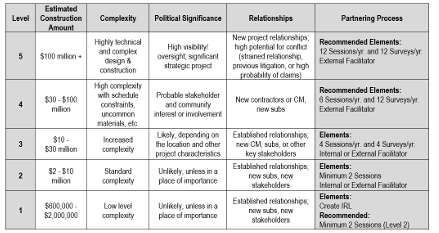
Image – Partnering Matrix – San Francisco Partnering Field Guide pg. 7
Tips for Selecting your Partnering Facilitator
A. For a Small/Standard Project
For a small, non-complex project, this is an opportunity to test out a new firm or a new Facilitator from a firm you have worked with in the past. If it’s your first project, reach out to your contractor and see if they have any recommendations. If neither of you have used someone previously, we have developed a roster of professional facilitators here or on the San Francisco Partnering website. You will see on this list there is a group of International Partnering Institute (IPI) Certified Partnering Facilitators. In my opinion, this is best place to start. Each of these Facilitators has signed a Facilitator’s Code of Ethics, demonstrated that they have completed professional partnering sessions (25 for Certified, 100 for Senior Certified, and 250+ for Master Certified), and shared sample Partnering Charters and References with the Certification Committee.
B. For higher Risk Projects
When you review the matrix above and see multiple items that are adding risk, it’s time to invest more time and energy into selecting your Facilitator. When you have a multi-season project or a job that may have complex technical requirements (which can often lead to challenging change order negotiations or cultural clashes) identity two or three facilitators and determine who is the best fit. I highly recommend you set up interviews via Zoom or Teams and use a simple scoring system so your team can do a “vibe and experience check.”
Key items to consider:
1. Partnering Facilitation is their full-time profession.
When you have a high-risk project or have staff who needs coaching and support through new or difficult issues, identify a facilitator who is experienced in supporting complex construction projects. A full-time facilitator will be able to respond to your team and will be able to navigate complex issues and coaching needs when crises emerge. They will understand the nature of the profession and will help your team ensure that they co-create meaningful goals, an effective issue escalation and resolution procedure, and will help you jointly develop a strategy to successfully deliver the project.
While you may be able to find someone who is excellent who moonlights as a Partnering Facilitator, there are several firms who have a specific model they are delivering, which will help your team deliver predictably successful results.
2. They understand the delivery model.
In my May newsletter, I shared effective partnering structures for projects using different collaborative delivery models. If your team is using CM/GC, Progressive Design/Build, or a new delivery model where the team lacks experience, make the Facilitator’s understanding of that delivery model part of your selection criteria. Ask questions and have them share examples of how they supported your specific project delivery (or something similar). They should have an opinion or a recommendation for how to support the team through design, construction, and activation/close-out. Take notes because the differences may be subtle.
3. They deeply understand neutrality.
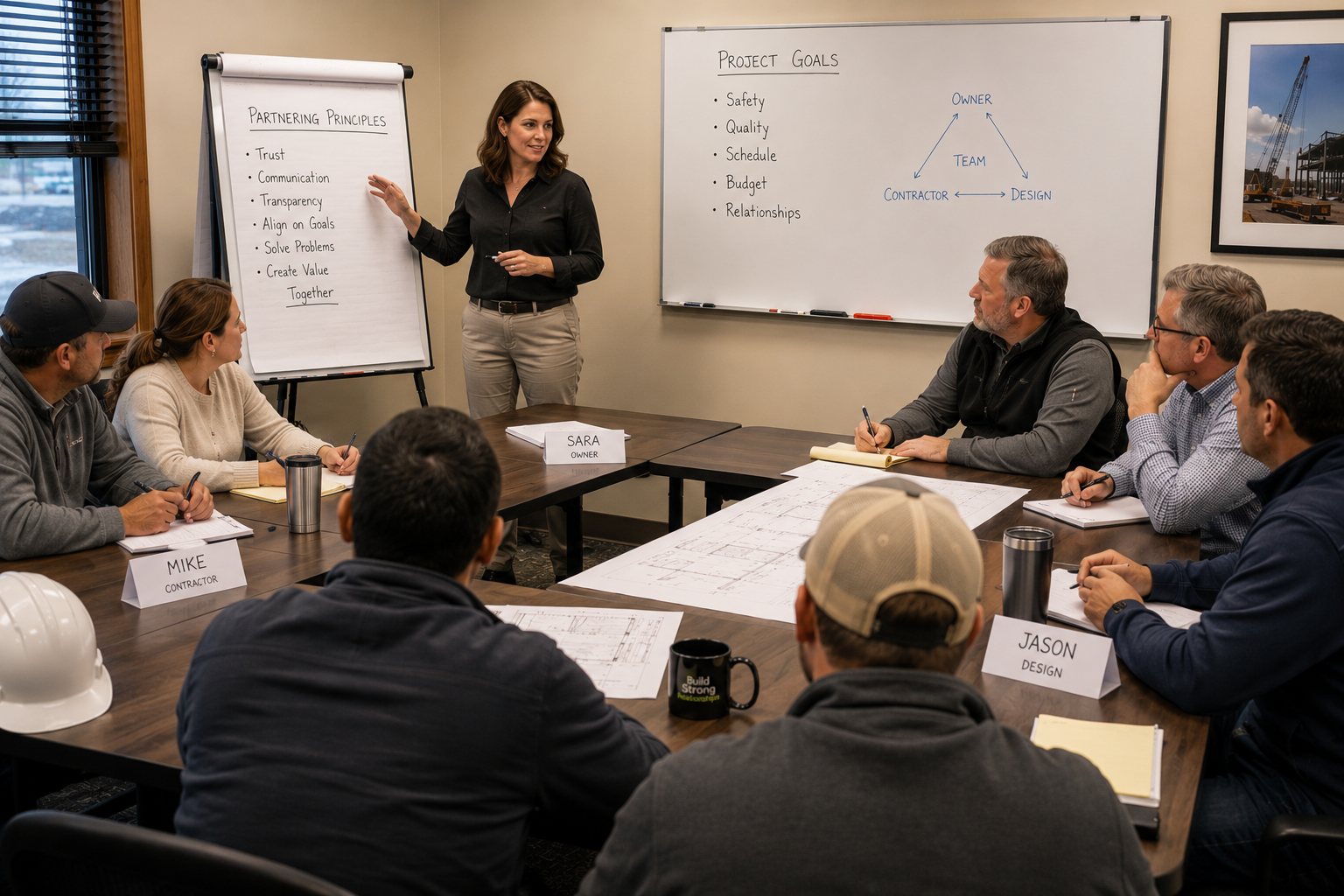
Your Partnering Facilitator is guiding the project team through a confidential, structured model that helps enable the team to successfully navigate the project culture and the grey areas of the contract documents rather than simple “black and white” change order entitlement issues. That’s your day-to-day job. We help teams negotiate change orders or delay claims that are nuanced and often require the ability to identify a fair and justifiable split of entitlement. Partnering Facilitators are taught how to remain neutral while managing negotiations and the top Facilitators will be able to serve as the neutral third party and hold the entire team accountable to working toward the project culture, the Goals, and the issue resolution agreements everyone co-creates through the Partnering process.
When you interview your Facilitator, think about the types of issues that may need to be managed. Is there high likelihood of third party delay? Is this a remodel in an operating facility where you cannot fully understand the scope until you start demolition? As part of your selection process, find out if your Partnering Facilitator has a mediation or some other background where they are accustomed to listening to multiple arguments and helping a team land on middle ground or navigate difficult conversations. Mediators are specifically trained to remain neutral while managing negotiations, a skill that becomes especially valuable when project teams are working through complex issues where multiple perspectives may be valid. At OrgMetrics, each of our Facilitators is a Certified Mediator and has taken (or in many cases taught) mediation and non-adversarial negotiation techniques.
It doesn’t matter who pays your Partnering Facilitator’s invoices, they are hired to serve as the neutral third party and will do our best to make everyone feel a) heard and b) respected. Remember – negotiated agreements often make all parties a little uncomfortable. If it were easy, the team would have already resolved it!
4. Focus on value, not on price.
The lowest responsible bidder for a professional service will likely not be your best fit. Remember my comment at the beginning about picking a surgeon? When I had a surgery on the growth plates of my ankles as a 14-year-old, my parents found the top orthopedic surgeon in the region who had delivered similar surgeries in the past. He was not the lowest cost surgeon, but we had full confidence in his ability to deliver on the day. He was our best fit and fortunately, we had a great outcome!
Your Partnering Facilitator’s fee will be dwarfed by the 30-40 salaries sitting in the workshop when you are on a large project. Invest in a Facilitator who will be able to pace with your team and effectively support you for the time you are investing. If you are meeting monthly, work with someone who can help steer your team and keep the partnering process fresh and functional. If you are meeting quarterly, work with someone who will get into the details with your team and who can help them celebrate successes and help you work through unresolved issues and set strategies as they are emerging.
5. Schedule your session(s) early.
Top Facilitators are busy. As with anything, the top people in their profession will have a busy calendar precisely because they are effective. Recognize that when you have a complex project, pushing your kick-off meeting 2-3 weeks to use the right Facilitator will be much more valuable to your team than picking your date and finding the individual who is available. My top clients book me out for the entire year and then we adjust sessions as needed as we get closer to the day. Consider setting up your partnering sessions on the same day as your weekly Progress Meeting (or OAC Meeting) because everyone is already in town and block them off at least one month or more in advance.
Let me know if you have any recommendations for interview questions or strategies that you have used to select a great Partnering Facilitator for your project team! And stay tuned for the third article in the series focused on Internal Strategic Partnering.
– Rob
 Rob Reaugh is President of OrgMetrics LLC. He facilitates the City and County of San Francisco Collaborative Partnering Steering Committee and currently works with San Francisco International Airport, San Jose International Airport, BART, Caltrans, and others. He holds a Masters’ Degree in Alternative Dispute Resolution.
For more information please contact Rob Reaugh, RobReaugh@Orgmet.com / (925) 487-2404 (cell), or OrgMetrics, (925) 449-8300.