


Good Decisions Don’t Happen by Accident – Why the Decision-Making Process Matters
Part 1 of 2
Part 1: Why the Decision-Making Process Matters
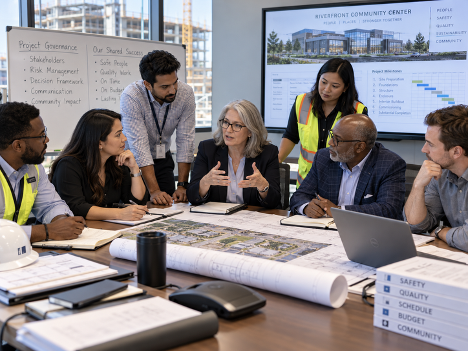
Every complex construction project involves hundreds, sometimes thousands, of decisions. Some are routine. Others affect millions of dollars, months of schedule, or relationships that have taken years to build. Yet surprisingly few project teams spend much time deciding how they will make decisions. In this first of two articles, we’ll explore why a good decision-making process matters and how to establish one. Next month, Part 2 will focus on decision-making criteria—a powerful tool for helping teams make better decisions together.
Good Governance Is About Making Good Decisions
Governance is often described in terms of organizational charts, committees, and approval authority. But at its heart, governance is about making sure the right decisions are made by the right people at the right time.
A good governance structure answers some basic questions:
- Who has the authority to decide?
- Who should be involved or consulted?
- How will disagreements be resolved?
- How quickly must decisions be made?
- How will decisions be communicated and implemented?
These questions become particularly important on complex projects, where multiple organizations have different responsibilities, perspectives, interfaces, and priorities.
An owner may be focused on long-term operating costs, while a contractor is concerned about constructibility and schedule. Designers must protect technical integrity, and operators want facilities they can maintain efficiently.
All are legitimate interests. A good process ensures they are considered without allowing decision-making to grind to a halt.

Process Matters as Much as Outcome
Here’s something I’ve observed in working with project teams: People are much more willing to accept a decision they disagree with when they believe the process was fair.
Were they heard? Was the right information considered? Were the right people involved? Was the reasoning explained?
When people trust the process, they are more likely to support the decision and move forward—even if it wasn’t their preferred outcome. When they don’t, even a technically sound decision can leave resentment, resistance, and mistrust behind. And on a complex construction project, today’s disappointed stakeholder may be tomorrow’s essential collaborator.
The Cost of a Poor Process
We’ve all seen what happens when decision-making breaks down. Decisions are delayed because no one is sure who has authority. Issues are escalated unnecessarily. People are left out and challenge decisions after the fact. Meetings multiply without producing answers. Decisions are revisited, sometimes repeatedly.
The resulting costs show up in rework, schedule delays, claims, and lost productivity. But there’s another cost that’s harder to measure: the loss of trust. When people lose confidence in the process, they begin protecting their own interests rather than working toward the project’s shared success.
Who Owns the Process?
Ultimately, project leadership must champion good decision-making. The owner and project executives establish the governance framework and clarify authority. Project managers make the process work day to day. Partnering facilitators can help teams build agreements about how decisions will be made and resolve problems when the process breaks down.
But everyone has a role in making it successful. Importantly, collaborative decision-making doesn’t mean everyone gets a vote—or a veto. It means that the people with relevant knowledge and responsibility have an appropriate opportunity to contribute, while accountability for the decision remains clear.
Building a Process That Works
A good decision-making process doesn’t need to be complicated. It needs to be understood, consistently applied, and adaptable.
Start by bringing project leaders together and walking through a few realistic scenarios. Consider an unexpected field condition, a significant design change, or a disagreement involving operations and construction.
For each scenario, ask: Who needs to participate? Who decides? What information is needed? How quickly must we act? What happens if we can’t agree?
Use the discussion to establish a few simple practices:
- Clarify authority. Make sure everyone knows who can make which decisions.
- Involve the right people early. Don’t wait until after a decision to discover an important stakeholder was overlooked.
- Match the process to the decision. Routine issues shouldn’t require executive approval, while high-risk decisions deserve appropriate scrutiny.
- Set time frames and escalation paths. Unresolved issues shouldn’t linger indefinitely.
- Document and communicate decisions. Capture what was decided, why, and who is responsible for following through.
Then make the process part of the project’s regular rhythm. Review outstanding decisions in team meetings, address recurring bottlenecks, and periodically ask whether the process is serving the team well.
As the project progresses from design through construction and commissioning, the process may need to evolve.
Most importantly, leaders must model the behavior they expect. A process becomes durable when people see that leadership respects it—even when taking a shortcut might be easier.
A Question Worth Asking
At your next project leadership meeting, try asking:
“If we faced a difficult, high-stakes decision tomorrow, would everyone know how we would make it?”
If the answer is uncertain, you’ve probably identified an important opportunity to improve project performance.
~ Kate
Next month: Good Decisions Don’t Happen by Accident, Part 2—How decision-making criteria can help teams move beyond competing positions and make better decisions together.
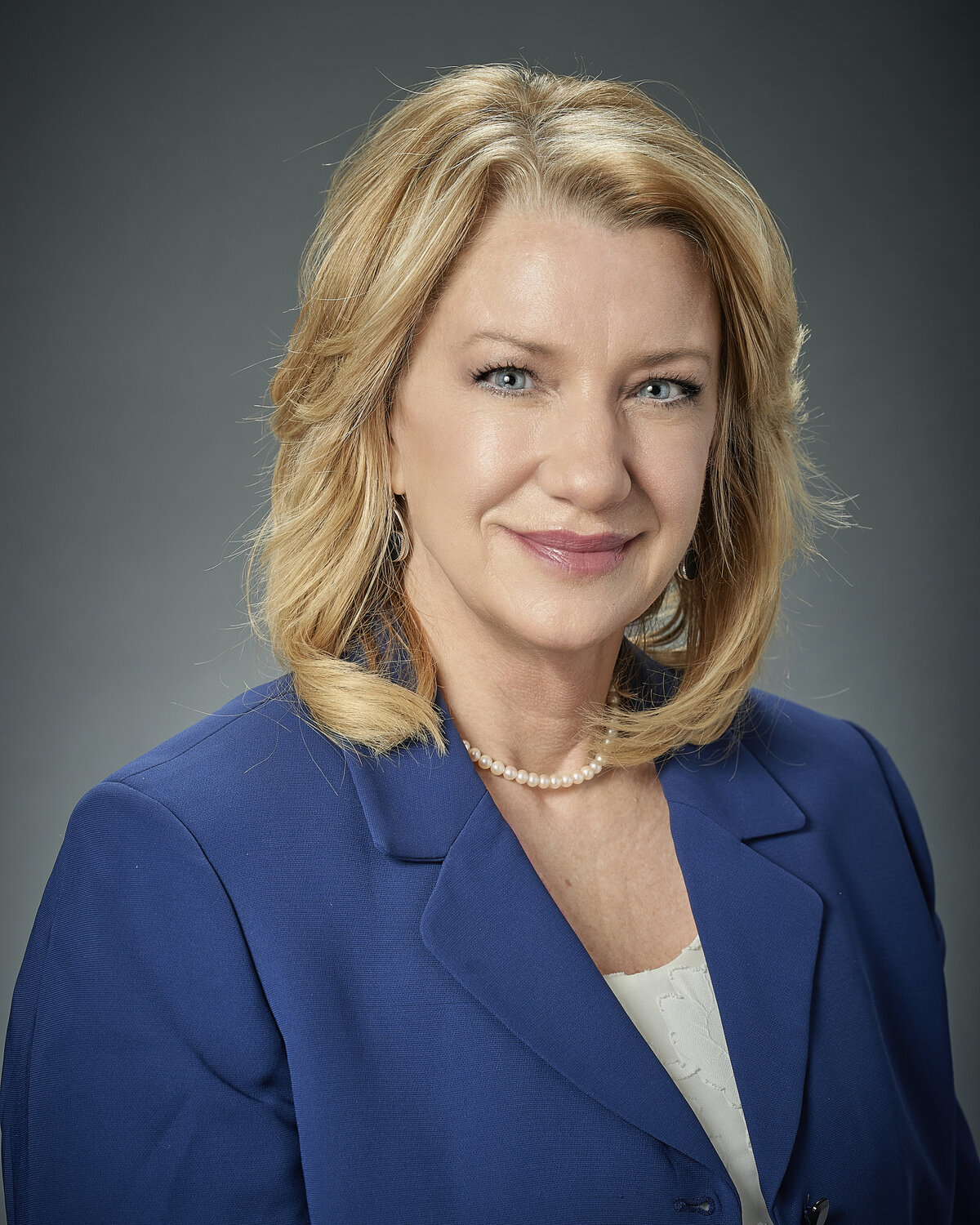
Kate Stewart is a certified construction Partnering facilitator, certified mediator, and organizational development consultant specializing in complex capital projects. She works with owners, contractors, and design teams across the U.S. and internationally to build trust, align leadership, strengthen collaboration, and establish effective processes for decision-making and issue resolution. Her experience spans aviation, transportation, federal facilities, water/wastewater, and other major infrastructure projects. Kate helps project teams navigate challenges, manage risk, and achieve successful project outcomes. She lives in Paradise Valley, Montana.
For more information, please contact Kate Stewart, katestewart@orgmet.com / (406) 414-9922 (cell) or OrgMetrics RobReaugh@Orgmet.com / (925)449-8300