


OrgMetrics Award Winning Projects
On Thursday, May 15th, IPI is celebrating their 16th Annual IPI Collaborate Awards & Conference. OrgMetrics is excited to have eight projects up for consideration. Read on for the project descriptions of OrgMetrics Award Winning Projects.
Sunnyvale Civic Center Modernization Project
(Category 2 – Buildings and Public Infrastructure)
Owner: City of Sunnyvale
Prime: Hensel Phelps
Designer: SmithGroup
CM: Jacobs
Facilitator: Rob Reaugh
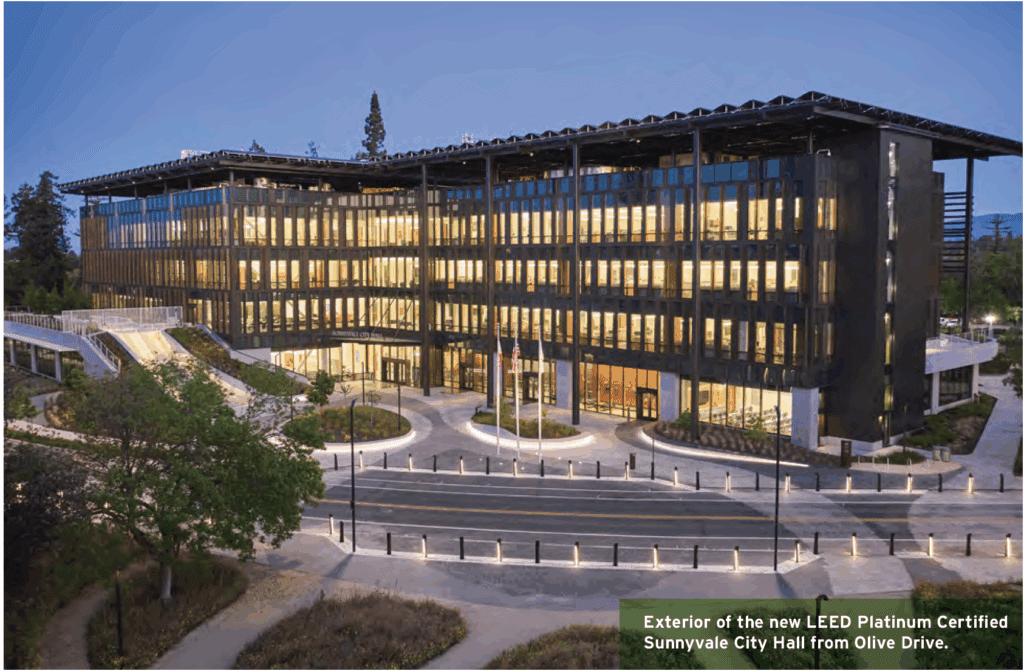
The Sunnyvale Civic Center Modernization Project was a visionary transformation of the City’s municipal core into a resilient, community-first, and sustainable urban campus. The $192M, 118,000 sq. ft. project delivered two major new facilities: a LEED Platinum, Net Zero Energy-certified City Hall and a hardened Emergency Operations Center (EOC), plus extensive site renovations and public space enhancements. Despite a 9-month PG&E delay and supply chain disruptions the base scopes of the project were delivered on the original schedule.
Project innovations included use of Canvas and Dusty Robotics for efficient drywall layout and installation. Extensive community engagement preserved beloved trees, protected community gardens, and enabled continued public access. All major goals were met, with the project team unanimously rating it an “A+ model project” in its final Partnering session.
The Sunnyvale Civic Center Modernization Project was a great example of what is possible when a team commits to working together to achieve excellence.
SFO Energy Management Control System (EMCS) Project
(Category 2 – Buildings and Public Infrastructure)
Owner: San Francisco International Airport
Prime: Suffolk Construction Company, Inc.
A&E: WSP USA Buildings Inc.
PMSS: Faith Group LLC
Facilitator: Rob Reaugh
The SFO EMCS project previously won a Gold Level Award and “Best in Class” in January at SFO’s 7th Annual Partnering Awards. The goal of SFO’s $31.5M EMCS Project was to integrate and upgrade the airport’s energy management systems, which supports SFO’s strategic goal of Zero Net Energy by 2030. Initially focused on the development and future automation of the energy and water management platforms, the project evolved to prioritize fire life safety upgrades for the International Terminal Building (ITB).
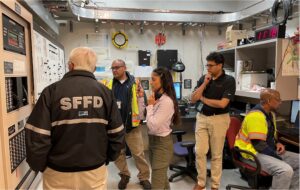
To ensure project success, the team worked collaboratively with stakeholders, including the San Francisco Fire Department and SFO’s Building Inspection and Code Enforcement Department, to ensure transparency and alignment as they successfully integrated 20+ year-old legacy systems with modern smoke control systems. This involved point-by-point inspection and upgrades of both mechanical smoke dampers and the software to integrate those systems, all while avoiding a full redesign.
This was a five-year project at the outset and it is important to recognize that it was suspended for 19-months and then pivoted completely, and yet still was completed on schedule, $2M under budget, and delivered with zero safety incidents across over 300,000 man hours.
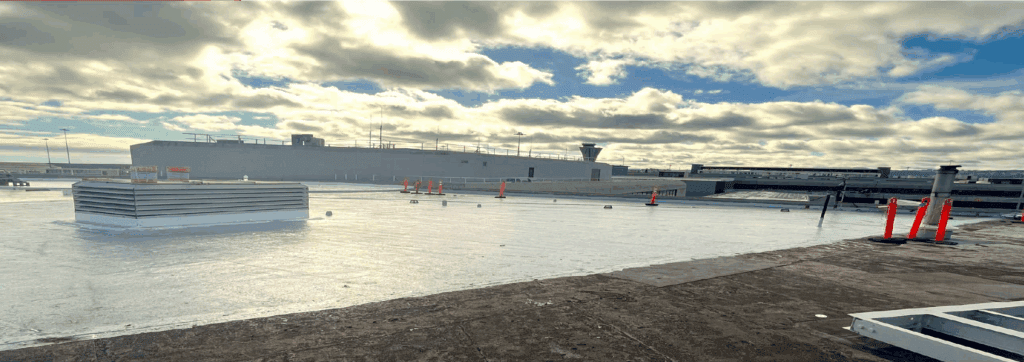
SFO Terminal 3 Boarding Area F Roof Replacement Project
(Category 1 – Buildings and Public Infrastructure)
Owner: SFO Planning Design & Construction
Prime: Schembri Construction
Designer: SFO Planning Design & Construction
CM: SFO Planning Design & Construction
Facilitator: Rob Reaugh
Completed in August 2024 (78 calendar days ahead of schedule saving $267K in direct costs), this $11 million project replaced aging roofing across multiple terminal sections of Terminal 3 West Boarding Area F, enhanced fall protection with a new non-penetrating guardrail system and included installation of new ladder platforms and walkway bridges to improve access and safety.
From the start, the project faced critical scheduling conflicts with the multi-billion-dollar Terminal 3 West (T3 West) expansion project. Shared access points and overlapping workspaces presented a high risk for delays. During the kickoff partnering session, the team agreed to re-sequence the roofing work and voluntarily gave up their laydown and office space—allowing T3 West to proceed without delay. This coordination not only preserved schedule integrity but strengthened inter-project relationships, resulting in future work opportunities for Pioneer Contractors.
Faced with a month-long material delay, the team quickly evaluated future demolition schedules and eliminated unnecessary roofing work—producing a $73,000 deductive change order while maintaining safety and performance standards.
Despite these and other issues, the project not only delivered a high-performance, energy-efficient SMART roofing system but also fostered deep partnerships among SFO, contractors, and stakeholders.
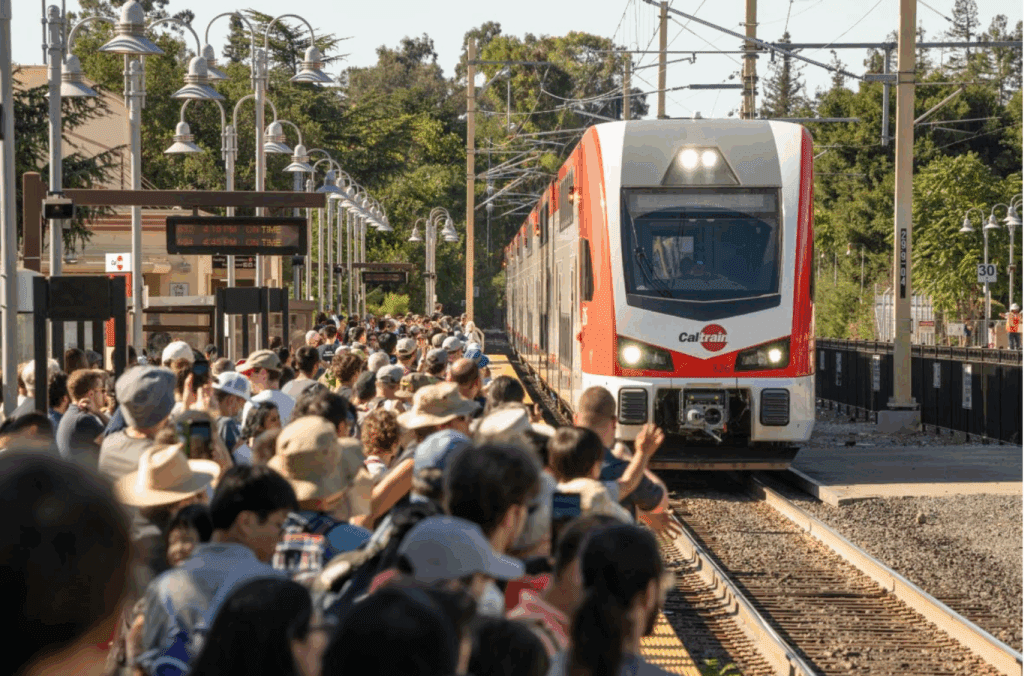
Caltrain Peninsula Corridor Electrification Project
(Category 3 – Civil Construction)
Owner: Caltrain
Prime: Balfour Beatty US
Main Subcontractor: Modern Railway Systems
Facilitator: Cinda Bond
The Caltrain Peninsula Corridor Electrification Project is a transformational infrastructure initiative that modernized 51 miles of commuter rail between San Francisco and San Jose. Transitioning from diesel to electric service, this $2.4 billion project now powers one of the most sustainable and efficient commuter rail corridors in the U.S., reducing greenhouse gas emissions by an estimated 250,000 metric tons annually.
Scope highlights included installation of a 25kV overhead catenary system, construction of 10 traction power facilities, integration of an upgraded signal system, and deployment of modern electric trains with accessible features, Wi-Fi, and faster, quieter service. Since launch, the line has seen a 39% increase in ridership, reflecting enhanced reliability and improved travel times.
Yet the true achievement lies in how the project turned around from deep discord to an industry benchmark through robust partnering. Following a major global settlement in 2021, the team established a revitalized collaborative approach and a pioneered the “Zipper” decision-making structure, which empowered field teams to solve issues at the lowest level, creating transparency and efficiency.
The Caltrain Electrification Project redefined what’s possible when agencies, contractors, and communities commit to collaboration. It stands not just as a sustainable rail upgrade, but as a landmark of partnership-driven success in American infrastructure.
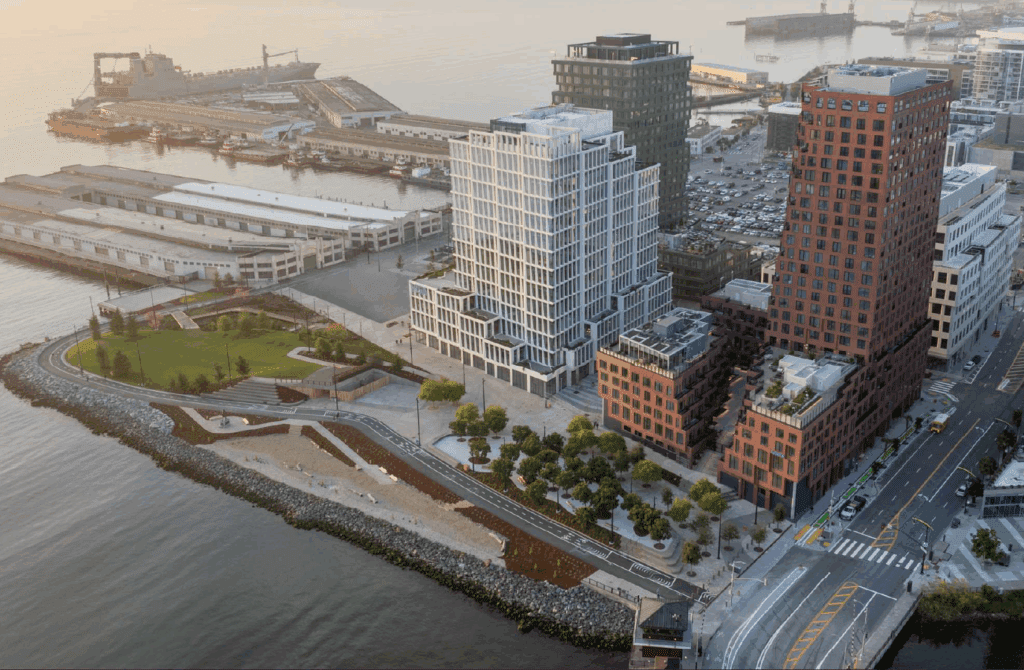
Photo courtesy of Jason O’Rear
Mission Rock Phase One Project
(Category 2 – Civil Construction)
Owner: Port of San Francisco and San Francisco Public Works
Prime: Webcor Builders
Designer: BKF Engineers Lead Civil Designer (+SCAPE & CMG for Landscape)
CM: Mission Rock Partners (Tishman Speyer & San Francisco Giants)
Facilitator: Rob Reaugh
Mission Rock Phase One is a groundbreaking public-private partnership that has transformed 28 acres of underutilized land along San Francisco’s southeastern waterfront into a vibrant, resilient new neighborhood. This $218 million horizontal infrastructure project included 2.4 acres of new streets, 5+ acres of parkland, and all utilities required to support four new residential and commercial buildings.
Constructed concurrently with vertical development, the project required complex interagency coordination and innovative engineering on a seismically sensitive site built atop Bay mud. Infrastructure included multimodal streets with pedestrian- and bike-friendly design, China Basin Park, and forward-thinking district utilities for water reuse and energy making Mission Rock the first LEED Gold Neighborhood Development on Port of San Francisco land
Delivered on a progressive GMP, the team completed all critical milestones such as building power-up and TCOs on time, despite a global pandemic and major utility permitting delays. The team saved $6.96M and used 30% Local Business Enterprise (LBE) participation, exceeding the 20% goal and investing over $120 million in minority- and women-owned businesses.
Mission Rock Phase One is more than infrastructure. It’s a national model for equitable, sustainable development that’s deeply embedded in community values. We are also excited to have members of the Executive Partnering team presenting on this program during the IPI Conference. We hope you will join us to learn more about it!
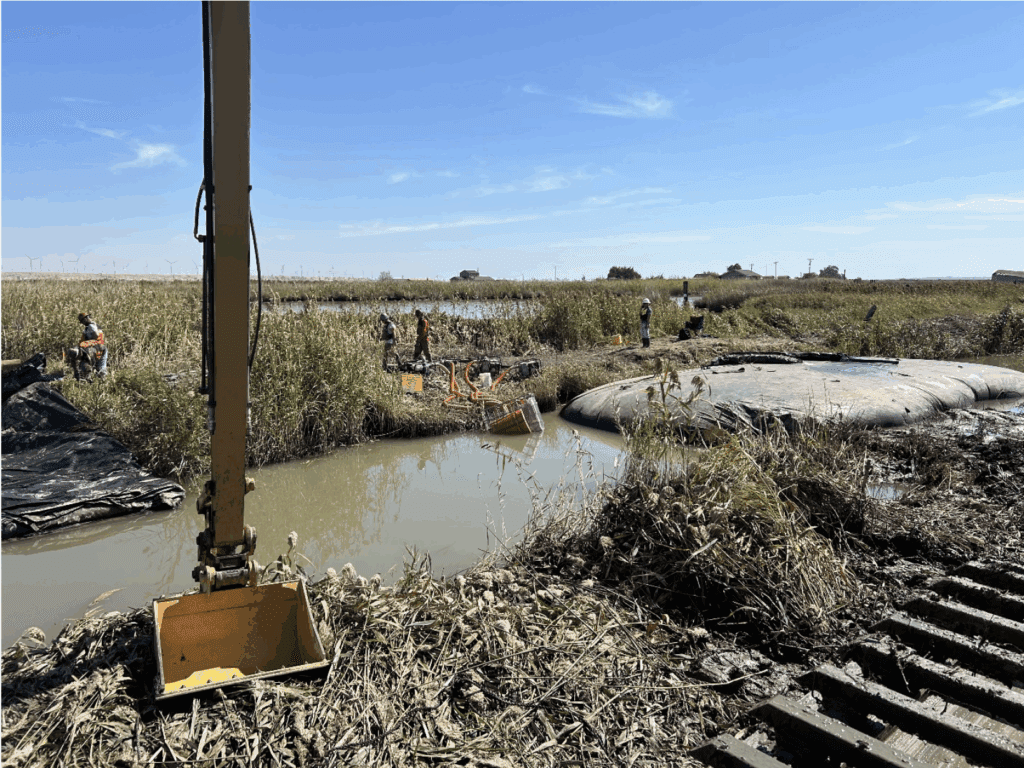
Chipps Island Tidal Habitat Restoration Project – Phase 2B
(Category 1- Civil Construction)
Owner: California Department of Water Resources (DWR)
Prime: Dixon Marine Services
Designer: DWR
CM: DWR
Facilitator: Cinda Bond
The Chipps Island Tidal Habitat Restoration Project – Phase 2B represents a landmark in collaborative partnering and ecological innovation. Located at the confluence of the Sacramento and San Joaquin Rivers, the project is part of DWR’s effort to restore critical tidal habitat to benefit endangered Delta species like the longfin and delta smelt.
This $3.66M CM/GC project successfully sealed three tidal breaches on Chipps Island, enabling full-scale habitat restoration to proceed outside the environmentally restricted in-water work window. The project overcame major logistical, environmental, and technical hurdles, and was delivered 30 days ahead of the original in-water deadline despite only water access, limited working windows, and mid-project storms and $2.05 million in cost savings due to collaborative innovations and early risk identification.
Partnering enabled novel solutions to unprecedented conditions. The team:
- Designed and installed custom-configured aqua dams (double-closed water bladders) instead of traditional cofferdams, sealing breaches in narrow tidal windows.
- Pivoted mid-construction when a storm floated one barrier out of place – rapidly installing a sheet pile cofferdam with emergency agency approvals to avoid tidal inflow and protect restoration timelines.
- Used a joint GMP negotiation model, inviting DWR’s cost estimator into transparent, open-book budgeting, improving trust and efficiency while controlling overhead and specialty equipment costs.
By isolating the island from tidal exchange in Phase 2B, the team enabled the success of the full restoration effort, qualifying the project for federal and state mitigation credits. The Chipps Island team proved the effectiveness of CM/GC for environmental restoration and left a legacy of innovation, adaptability, and trust.
Alemany Interchange Improvement Project
(Category 1 – Civil Construction)
Owner: City and County of San Francisco, Public Works
Prime: Minerva Construction, Inc.
Designer: San Francisco Public Works
CM: an Francisco Public Works
Facilitator: Cinda Bond
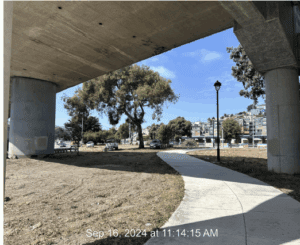
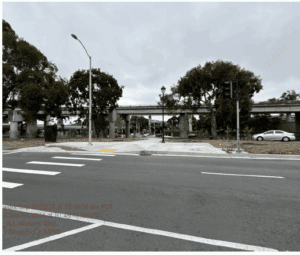
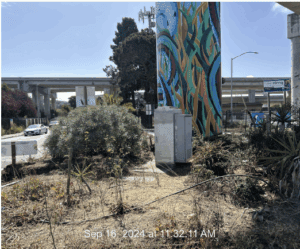
The Alemany Interchange Improvement Project, located under the I-280 and U.S. 101 interchange in San Francisco, is a powerful example of how collaborative partnering transforms complex, multi-agency challenges into successful, community-centered outcomes. Despite navigating more than a year of schedule extension due to utility coordination, permitting delays, and stakeholder constraints, the team delivered the project with zero claims, zero safety incidents, and an estimated $300,000 in savings due to partnering.
The $3.37 million project upgraded pedestrian, bike, and vehicle safety infrastructure along Alemany Boulevard. Improvements included a new multi-use path, upgraded signals, additional lighting, crosswalks, ADA-compliant curb ramps, and traffic-calming bulb-outs, all designed to better connect neighborhoods and support year-round Farmer’s Market operations.
The project’s success stems from a deeply collaborative spirit. Despite challenges ranging from encroachment permits to unforeseen field conditions, the team consistently emphasized trust, transparency, and mutual accountability. By using structured partnering as a living framework rather than a one-time event, the Alemany Interchange team created lasting partnerships and delivered real public value.
San Andreas Reservoir Road Improvement Project
(Category 1 – Civil Construction)
Owner: San Francisco Public Utilities Commission
Prime: Anvil Builders Inc.
Designer: San Francisco Public Utilities Commission
CM: San Francisco Public Utilities Commission
Facilitator: Cinda Bond
The $16.6M San Andreas Reservoir Road Improvements Project demonstrates the extraordinary impact of collaborative partnering on project success. Originally scheduled for completion over two dry seasons, the team finished construction 378 days ahead of schedule, saving $1.15 million in costs and eliminating an entire year of operational and public impacts.
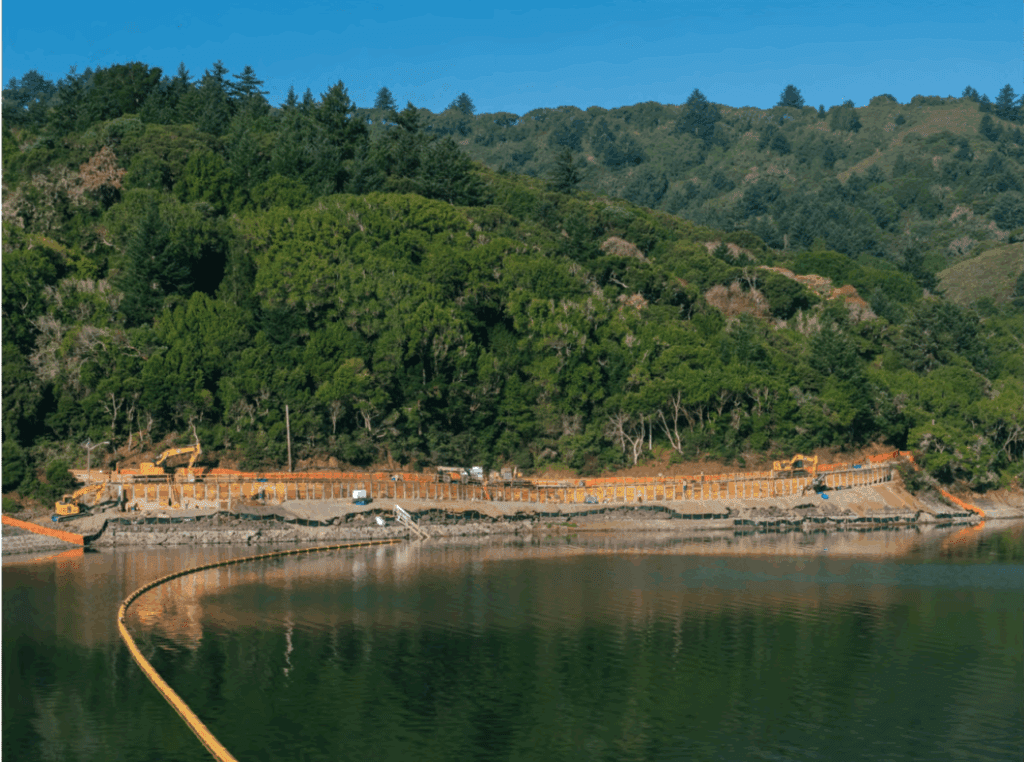
Located in SFPUC’s Peninsula watershed and perched above the San Andreas Fault, the project enhanced vital access roads serving watershed managers and public agencies. Work included construction of a 500-foot retaining wall, stabilization of eroded embankments, shoreline protection, and anchor replacement in the reservoir itself. The main access road, “In-Going Road,” is a critical link, and its reinforcement was essential to maintaining safe and reliable operations
The San Andreas Reservoir Road Improvements Project exemplifies how structured partnering can transform a high-risk, technically demanding public works project into a benchmark of efficiency, safety, and environmental stewardship. It is a project that finished early, under budget, and with relationships stronger than ever – a clear model of the IPI mission in action.
Join us in celebrating all of the outstanding project teams at IPI Collaborate, IPI’s 16th Annual Conference & Awards.
– Rob
 Rob Reaugh is President of OrgMetrics LLC. He facilitates the City and County of San Francisco Collaborative Partnering Steering Committee and currently works with San Francisco International Airport, San Jose International Airport, BART, Caltrans, and others. He holds a Masters’ Degree in Alternative Dispute Resolution.
For more information please contact Rob Reaugh, RobReaugh@Orgmet.com / (925) 487-2404 (cell), or OrgMetrics, (925) 449-8300.