


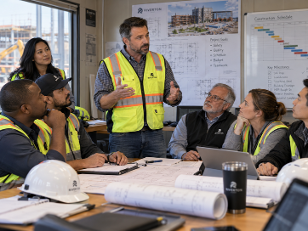
When Confidence Becomes a Project Risk
“The greatest bottleneck to understanding is not misunderstanding. It is confident misunderstanding.”
Yesterday I read this quote from Greg McKeown and thought about the projects where I’ve seen it play out.
In my experience, most construction leaders can deal with uncertainty. They know how to ask questions, investigate a problem, bring the right people into the room, and work toward an answer. What is much harder to catch is the situation in which everyone believes they already understand what is happening.
That’s when misunderstanding gets expensive.
Nothing is more costly than confident misunderstanding, especially when the person who is confident also has the authority, experience, and ability to turn that conviction into action. When our underlying assumption is wrong, our strengths can work on behalf of our error. Talented people solve the wrong problem. Strategy organizes around the wrong reality. Resources are assigned to the wrong priorities. And excellent execution simply gets the team to the wrong destination faster.
In a funny twist, construction is particularly vulnerable to this because decisive leadership is usually rewarded. Projects move quickly and decisions have downstream consequences. A superintendent, project manager, designer, owner’s representative, or executive often has to make dozens of judgment calls without perfect information. Confidence is useful.
Until confidence substitutes for verification.
I became the partnering facilitator on a project that was running several weeks behind. My pre-partnering interviews revealed that the PM was convinced the problem was subcontractor productivity, so he was pushing the superintendent to increase manpower. But the real issue was that work areas were not being released in a predictable sequence because RFI responses were slow. More people would never solve this problem. Instead, they would have created additional problems and costs.
Or consider an owner who believes that a contractor is “padding” change requests. The owner tightens approval processes and begins challenging every cost item. The contractor, feeling distrusted, becomes more defensive and starts documenting everything. Soon the team has created exactly the adversarial environment everyone hoped to avoid. Months later, the underlying problem turns out to be inconsistent direction from several owner representatives.
In cases like these, the project risk is not due to bad intentions. It begins with an explanation that becomes a fact before it being tested.

Where Confident Misunderstanding Shows Up and Becomes a Project Risk
It often sounds perfectly reasonable.
“The contractor just needs more people.”
“The owner only cares about cost.”
“Design is holding us up.”
“The field team doesn’t understand the contract.”
“They’re resisting the change because they don’t like it.”
“That subcontractor is always difficult.”
“The schedule problem started three months ago.”
“We already discussed this.”
The danger is not that any of those statements is wrong. The danger is that they can quickly become the organizing story for the team.
Once a leader adopts that story, confirmation bias springs into action. People naturally begin looking for evidence that supports the story. Team members who see something different may eventually stop speaking up, particularly if the leader communicates certainty rather than curiosity. The result is sometimes a quieter team and a more dangerous project.
A useful leadership habit is to add one simple question whenever the team seems unusually certain:
High-Performing Teams Do Something Different
They treat important assumptions as hypotheses until the evidence catches up.
Helpful questions to ask are,
“What would we expect to see if our explanation were wrong?”
“What else could explain this?”
“Who sees this differently?”
“What have we verified versus assumed?”
In the end, construction requires decisions, not endless analysis. The goal is not to replace decisiveness with hesitation. It is to insert just enough curiosity between conviction and action to make sure the team is solving the problem that actually exists.
~ Kate
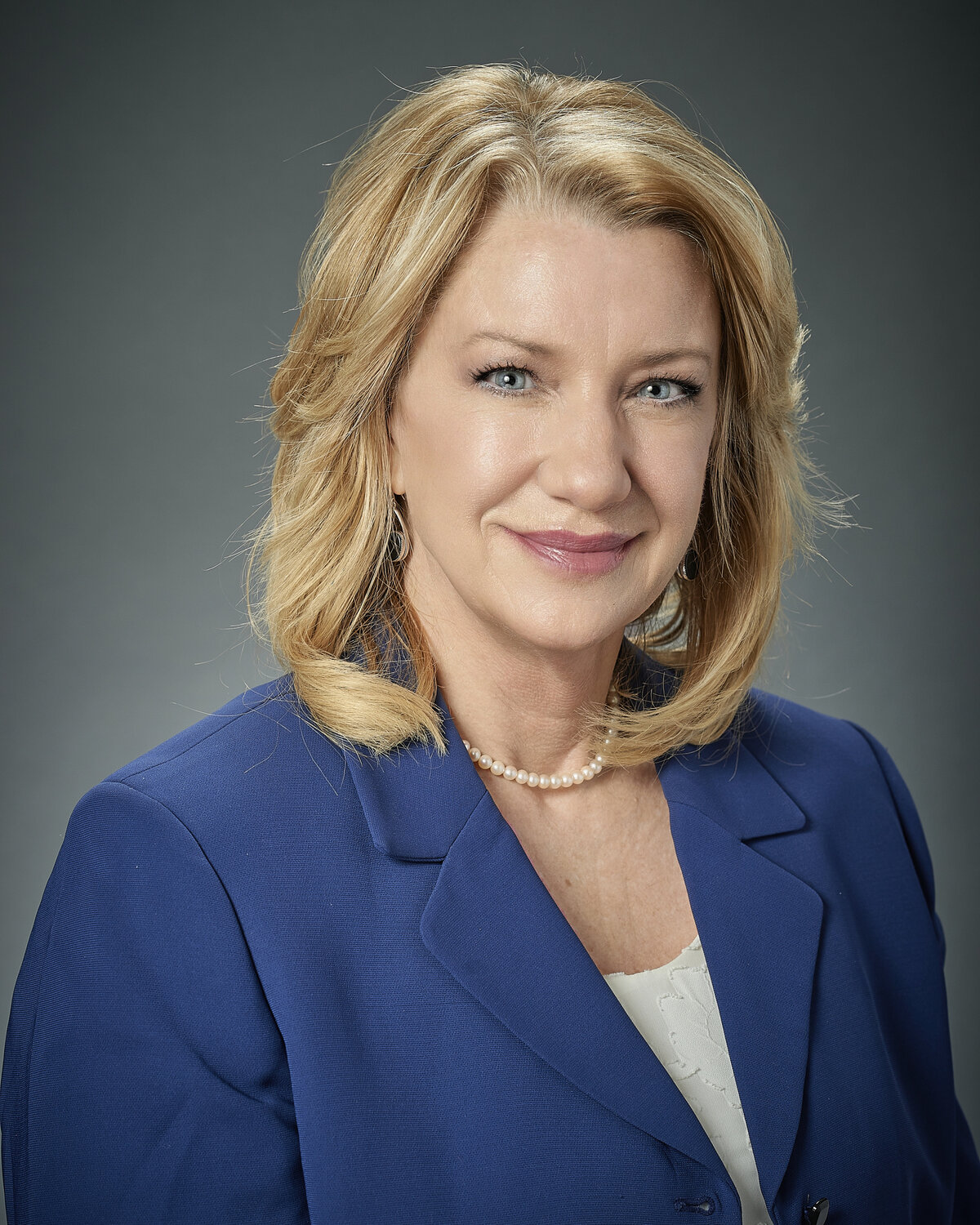
Kate Stewart’s distinguished career spans 25 years as a professional neutral and organizational development consultant for numerous large organizations. Her expertise includes Partnering facilitation on high-profile projects, such as the Kansas City International Airport mega program. She has served as a coach, trainer, researcher, and thought leader across various industries and disciplines on both domestic and international fronts. Kate is based in the picturesque Paradise Valley, Montana, where she enjoys hiking, gardening, and reading.
For more information, please contact Kate Stewart, katestewart@orgmet.com / (406) 414-9922 (cell) or OrgMetrics RobReaugh@Orgmet.com / (925)449-8300