

The Power of Mediation
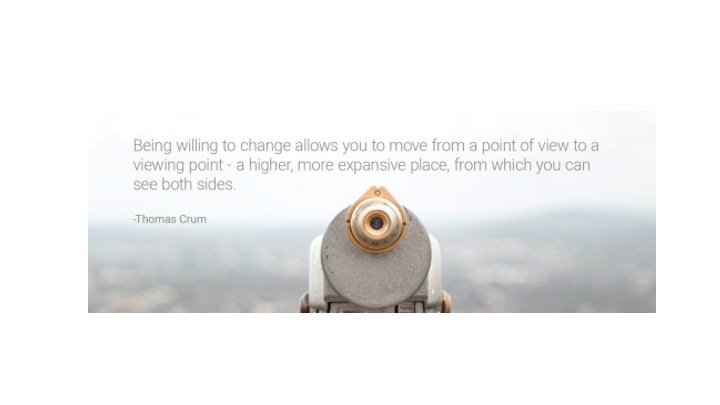
If I had the power to give one gift to every project team I work with, it would be the ability to manage conflict well. In The Magic of Conflict, Thomas Crum writes:
“In a conflict, being willing to change allows you to move from a point of view to a viewing point—a higher, more expansive place, from which you can see both sides.”
That idea has shaped both my personal journey and my professional work.
How I Learned to Sit With Conflict
My first experience with mediation didn’t happen in a boardroom or on a jobsite – it happened when I was 16 years old, as a junior at Amador Valley High School in Pleasanton. I was part of the school’s pilot Peer Mediation program. After training, I gravitated toward the “field work,” meeting with students who requested mediation or who were struggling academically.
What we learned quickly was that poor grades or repeated conflict were rarely about ability. More often, they were about what was happening at home or a student’s difficulty navigating relationships, communication, and stress.
That experience stuck with me.
Years later, while playing professional volleyball in Germany, I found myself on the other side of conflict negotiating contracts without an agent. I hated it. Not because the stakes weren’t manageable, but because asking for what I needed felt deeply uncomfortable. I wanted the negotiation over as quickly as possible. So I decided to learn how to do it better.
That decision led me to the Master’s Program in Dispute Resolution at the Straus Institute at Pepperdine Law School. Through mediation and negotiation work in small claims court, something shifted. What once felt adversarial became collaborative. I stopped seeing conflict as something to avoid and started seeing it as something that, handled well, could actually move people forward.
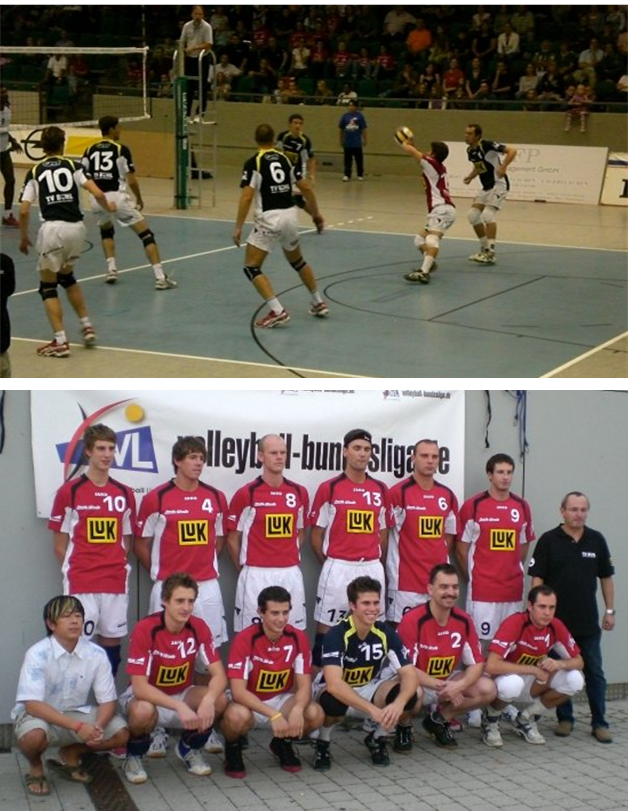
Rob Reaugh is in the red shirt in the top photo and blue shirt in the bottom photo
What I See on Projects
On projects, we see technical issues become disagreements. The disagreement can be about the technical approach or about how to commercially handle the solution the team implements in the field. We observe Construction Management professionals and PMs start to shift into repeated positions and arguments. The project leaders are starting to act like frustrated attorneys digging into the specifications and drawings as they escalate differences of opinion. The arguments get predictable and more deeply ingrained like how a hiking path becomes a flattened patch of dirt. Unfortunately, that’s when communication starts to break down.
You can usually see the symptoms:
- Scope ambiguity lingers too long
- Decisions feel incomplete or land awkwardly in the field
- Team members feel blamed, boxed in, or unheard
Too often, these issues play out publicly in meetings, and bickering becomes normalized at the expense of trust, time, and momentum.
Disrupting the Pattern
When positions start repeating, it’s time to carve a new trail. A few effective ways to do that:
- Step away from the conference room and walk the site together
- Have each side present the other party’s position to build shared understanding
- Identify overlaps where progress is possible
- Isolate the true points of difference and escalate only what’s necessary
These moments don’t require more authority, they require better facilitation.

Why Mediation Skills Matter
From my perspective, the best teams are able to resolve challenging issues using the Partnering Framework that we put together. The Issue Resolution Ladder and Partnering Commitments (when used to their fullest extent), allow teams to resolve the vast majority of issues.
When you are really stuck, the Partnering Facilitator (or a neutral third party) can really help you figure out the best way to “get to yes” and move through the issue. Great facilitators are natural mediators who are comfortable with transforming conflicts. They have honed their craft to help the team when they need to carve a new conversational path. They are able to:
- Ask clarifying questions before assumptions take over
- Hold space for frustration without amplifying it
- Separate people from the problem
- Keep project success, not personal victory, at the center
These aren’t soft skills. They’re leadership skills. And skills I believe are essential for both project leaders and for Partnering Facilitators.
Want to Go Deeper?
At OrgMetrics, we’ve long believed that technical excellence and human dynamics are inseparable. The best schedules, tools, and processes still depend on how people communicate when things get uncomfortable. All of our Partnering Facilitators are Certified Mediators, and I believe this is an essential set of skills for construction professionals.
So – if you are interested to learn more or become a Certified Mediator, I hope you reach out to me to help connect you or if you are really interested, you can sign up with the Center for Community Dispute Settlement (CCDS), based in Livermore, California. I serve on the Board and would love to see more construction professionals interested in becoming certified Mediators. They are launching a new 50-hour Mediator Training and Certificate course on January 31st and there is still time to register!
Please visit their website to learn more.
Remember… our projects do not succeed by avoiding conflict. They succeed when people are willing to take a higher, more expansive view of the conflict to arrive at the best possible solution… together.
– Rob
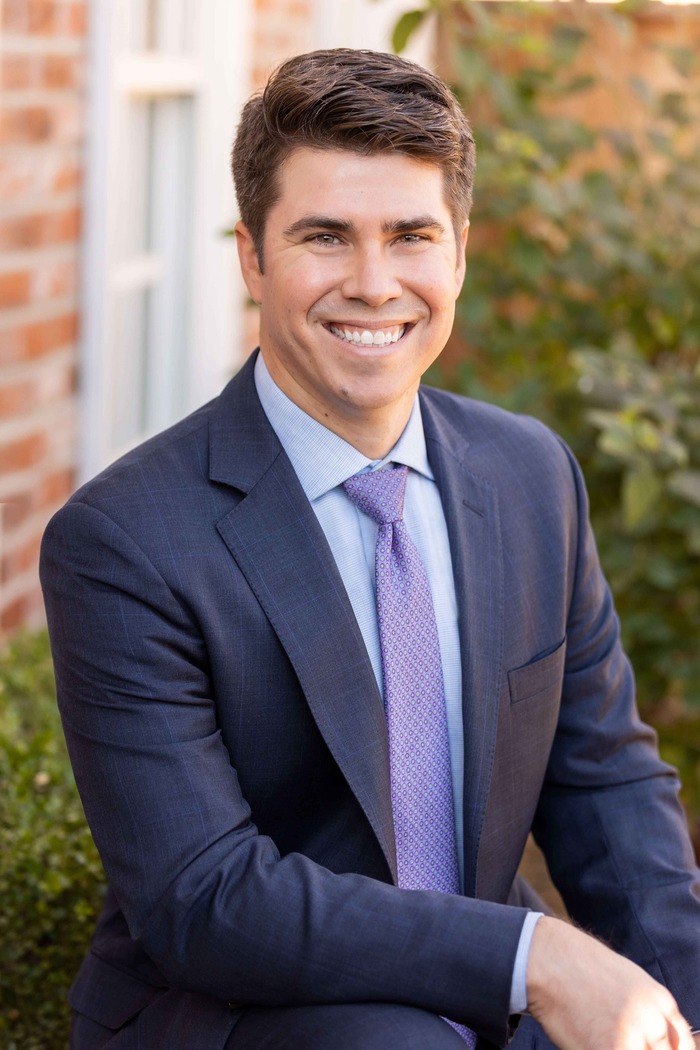 Rob Reaugh is President of OrgMetrics LLC. He facilitates the City and County of San Francisco Collaborative Partnering Steering Committee and currently works with San Francisco International Airport, San Jose International Airport, BART, Caltrans, and others. He holds a Masters’ Degree in Alternative Dispute Resolution.
For more information please contact Rob Reaugh, RobReaugh@Orgmet.com / (925) 487-2404 (cell), or OrgMetrics, (925) 449-8300.