

Safe Accountability: The Hidden Cost of Silence in Project Teams
Creating a culture where project team members can question, disagree, and report errors without fear of retaliation unlocks things like efficiency, innovation, and safety. When voices are stifled, projects pay a high price in scope creep, budget overruns, and compromised outcomes.
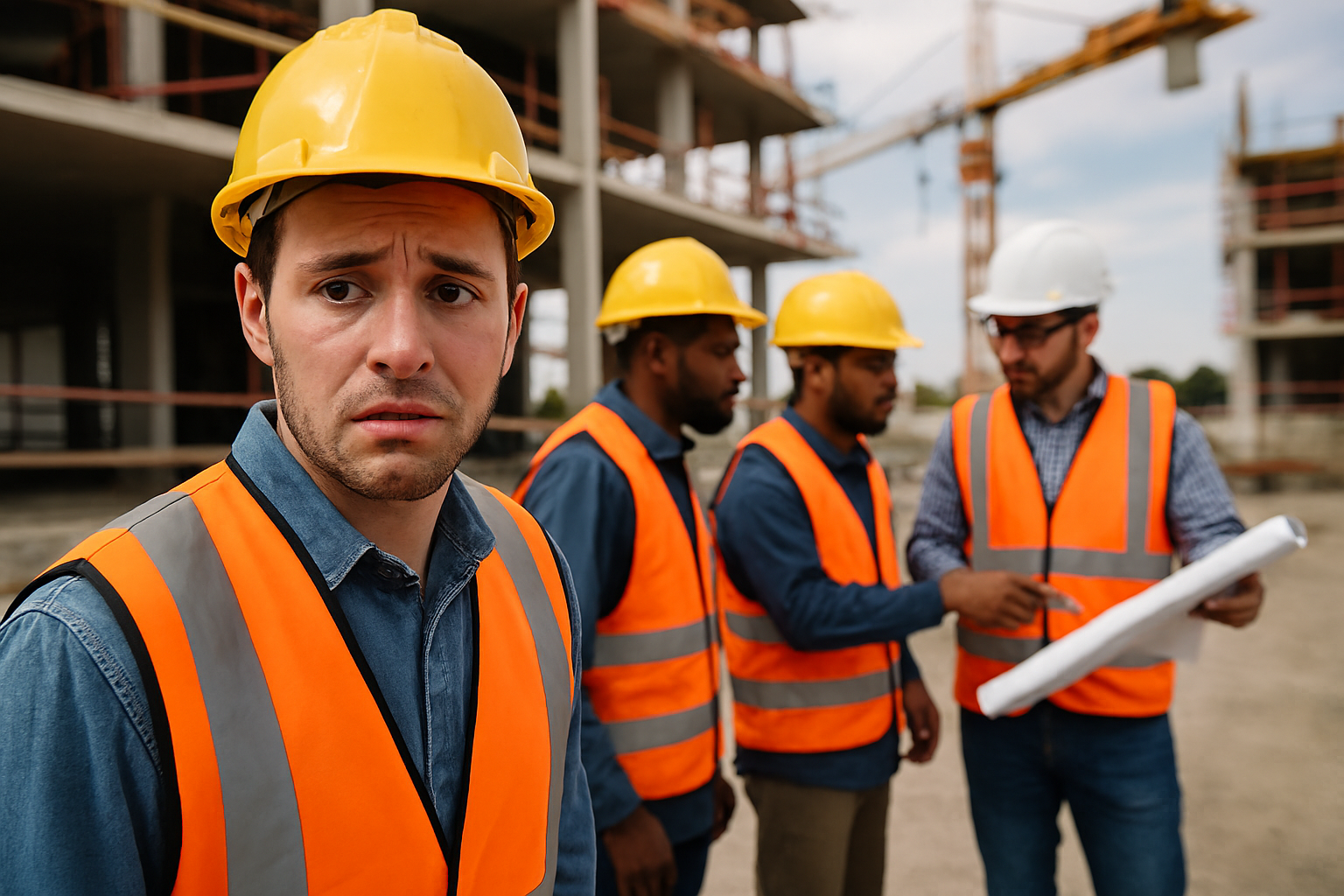
In my years as a corporate ombuds and now as a Partnering Facilitator, I have seen many examples of the cost of silence in project teams. I want to share some facts and ideas with you around these questions: Why does silence persist? What are the costs of staying quiet? How does a culture of psychological safety transform project performance?
Why Does Silence Persist?
- Concern about appearing unqualified or inexperienced
- Fear of being labeled a troublemaker by project or construction managers
- Past incidents of negative feedback or public rebukes
- Personality or cultural norms that discourage open dissent
- Pressure to maintain the schedule — “speaking up will slow us down”
Example #1:The junior electrical engineer notices incorrect cable specifications taped to the control panel but stays silent, fearing embarrassment.
Outcome: Lights are energized with the wrong voltage, causing a days-long system failure, a $150,000 rewire, and flight delays.
What are the Costs of Silence in Project Teams?
- Unexpected change orders as issues surface late in construction
- Budget overruns when minor mistakes escalate into major rework
- One-dimensional decision-making due to missing insights
- Suppressed innovation as team members withhold creative fixes
- Heightened safety risks when hazards go unreported
- Reduced morale when contributions are ignored
Example #2: A surveying technician spots that approved drawings call for 4.5 inches of asphalt instead of the specified 5 inches but assumes someone else will speak up.
Outcome: Sections of newly laid pavement crack under bus traffic. Repairs cost $250,000 and delay lane openings by two weeks.
Example #3: A foreman hears masons joking about bypassing harness inspections. Worried about slowing the install, the crew foregoes safety checks.
Outcome: A minor fall leads to an OSHA investigation, $75,000 in fines, and a mandatory work stoppage that pushes completion back by ten days.
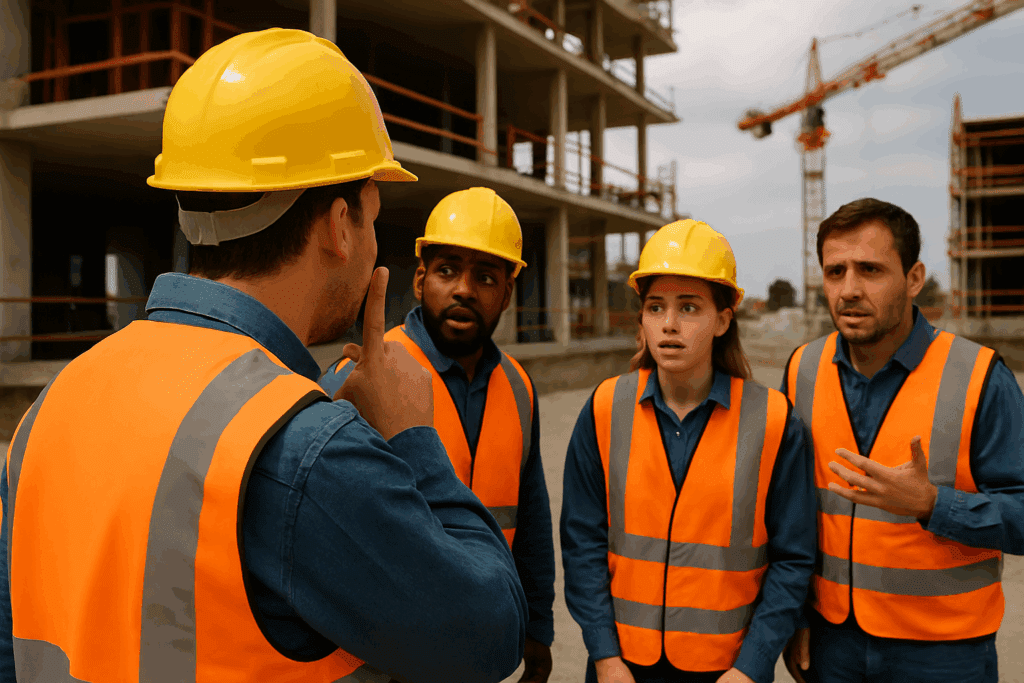
How Does a Culture of Psychological Safety Transform a Project Performance?
Psychological safety (the shared belief that speaking up carries no punishment) is the cornerstone of high-performing teams.
- Teams with strong psychological safety complete projects more efficiently and generate more innovative solutions.
- Google’s Project Aristotle identified psychological safety as the top factor in team success.
- Studies by Harvard’s Amy Edmondson demonstrate error rates drop significantly when staff feel safe to report near-misses and concerns.
When safe accountability is embedded, constructive challenges prevent costly mistakes and generate tangible rewards.
Example #4: On a wastewater treatment plant project, a civil engineer identifies a mismatch between pipe grades in the design drawings and field conditions. Instead of remaining silent, the engineer flags the issue during the daily coordination meeting.
Outcome: The team adjusts the pipe alignment before excavation begins. As a result:
- Excavation and backfill costs decrease by $80,000.
- Schedule remains intact, avoiding a two-week delay.
- The client awards the team an early‐completion bonus of $50,000.
- Crew morale soars, with field staff reporting greater confidence in leadership.
Actions to Reinforce Safe Accountability
Project leaders are often aware of the costs and benefits and want to create a culture of safe accountability but don’t know how. I’m thrilled to be asked this question, because I know I’m talking to a leader willing to transform the team and the project. If you are one of those leaders, here are a few ideas to create safe accountability on your team.
- Lead with open questions: “What haven’t we considered?”
- Recognize and reward problem-spotting, not just milestones achieved
- Respond appreciatively to all concerns—avoid defensive reactions
- Model vulnerability by sharing your own oversights first
- Embed speaking-up moments into routine meetings
Remember, building safe accountability slashes hidden costs, fuels innovation, and reinforces a culture where every voice safeguards project success. Silence might feel easier, but the true path to efficiency lies in empowered conversation. I hope we can all do this hard work together so our teams and our projects reap the benefits!
~ Kate
Kate Stewart’s distinguished career spans 25 years as a professional neutral and organizational development consultant for numerous large organizations. Her expertise includes Partnering facilitation on high-profile projects, such as the Kansas City International Airport mega program. She has served as a coach, trainer, researcher, and thought leader across various industries and disciplines on both domestic and international fronts. Kate is based in the picturesque Paradise Valley, Montana, where she enjoys hiking, gardening, and reading.
For more information, please contact Kate Stewart, katestewart@orgmet.com / (406) 414-9922 (cell) or OrgMetrics RobReaugh@Orgmet.com / (925)449-8300