


Become an Owner of Choice: Break Down Silos
In the construction industry, we often pride ourselves on meticulous planning, precise scheduling, and organized management practices. Yet, paradoxically, the very structure we impose to streamline processes can become our greatest obstacle: organizational silos. These invisible yet powerful divisions not only hinder collaboration but also prevent projects from reaching their full potential.
Understanding the Impact of Silos
Organizational silos emerge naturally within construction processes as projects move through distinct phases: planning, programming, design, construction, and activation. While structuring our organizations in this manner makes logical sense on paper, the practical implications can be detrimental. Each department becomes isolated, working towards individual, localized goals, potentially losing sight of the overarching objectives of the entire project.
This phenomenon is known as local optimization. Teams strive for excellence within their confined scope without adequately considering how their choices impact subsequent phases or the overall outcome. The result? Waste, delays, and frustration—and ultimately, a project that falls short of its original vision.
A Silent Killer of Projects: Isolation
Isolation within departments is a silent killer of projects. Communication breakdowns lead to missed opportunities, redundant work, and mistrust among team members. These inefficiencies compound, gradually eroding project budgets, timelines, and morale.
The real tragedy is that this silo mentality deprives your project of its greatest asset: the collective wisdom of your team. Each member brings a unique set of experiences, insights, and expertise. When isolated, these assets remain untapped. Instead, fostering collaboration across all project phases ensures that knowledge flows freely, informing better decisions at every stage.
The Nozzle Effect: Maximizing Resources
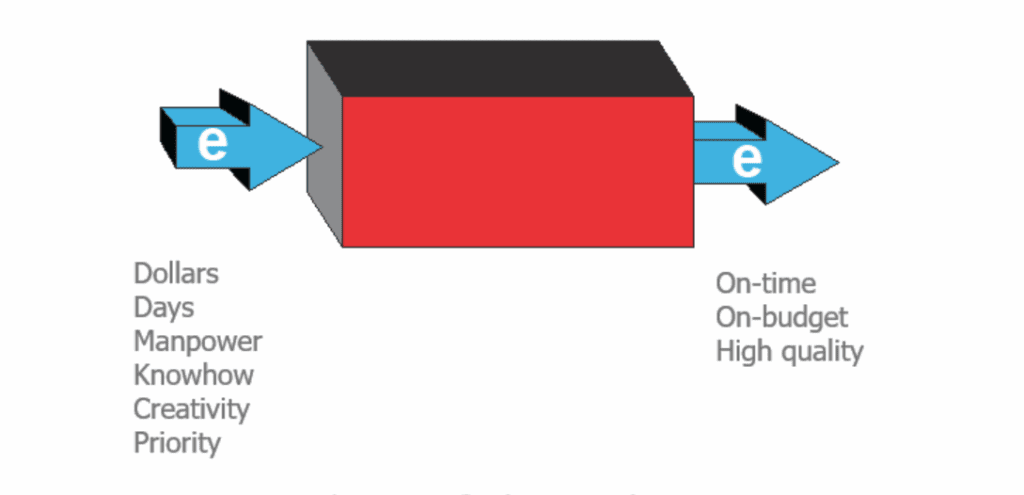
Consider a garden hose nozzle. Unfocused water sprays broadly but lacks intensity. Tightening the nozzle focuses the stream, maximizing velocity and precision. Similarly, aligning your teams around common goals focuses their collective energy, ensuring resources—time, talent, and funding—are efficiently directed toward strategic project outcomes.
Collaborative Partnering allows you to develop the “Nozzle Effect,” where team members across various project stakeholders engage proactively to identify challenges early, share solutions freely, and collectively optimize resource allocation. The result? Reduced waste, increased efficiency, and significantly enhanced project outcomes.
Building Trust and Momentum: Driving Out Fear
One of the foundational elements to breaking down silos is trust. Without it, fear takes root—fear of blame, failure, or criticism. This fear motivates team members to guard their knowledge, protect their company, and avoid taking risks. As fear builds, silos solidify, crippling collaboration and innovation.
Conversely, cultivating a high-trust environment fosters transparency and openness, essential for true collaboration. Teams feel safe sharing ideas, admitting mistakes, and offering creative solutions without fear of retribution. Trust, unlike fear, builds momentum. Each positive interaction strengthens relationships, boosts morale, and attracts the industry’s best talent—designers, contractors, and employees alike.
Steering Toward Success: The Partnering Steering Committee
Owners who establish a Partnering Steering Committee can serve as a powerful catalyst for dissolving silos and fostering collaboration. This committee comprises influential project leaders across all project stakeholders. This includes the owner’s team along with the contractors who perform their work. They are united by a common vision: the overall success of the owner’s projects. Working together to overcome barriers to success.
Owners who adopt these strategies not only enhance immediate project outcomes but also establish themselves as leaders in the industry. Employees, designers, and contractors are drawn to environments where their contributions are valued, communication flows freely, and shared goals drive every decision. This attracts the best talent and encourages sustained loyalty, dramatically improving project outcomes and organizational reputation.
Making 1 + 1 = 30: The Power of Structured Collaborative Partnering
In isolation, teams and individuals can only achieve so much. However, Collaborative Partnering transforms the potential of your workforce from additive to multiplicative. When collaboration is deeply embedded within your organizational DNA, resources, insights, and innovations flow seamlessly, amplifying impact exponentially.
OrgMetrics recommends the International Partnering Institute’s Project Leader Certification Training as a powerful tool to help your teams implement these collaborative practices effectively.
Take the Next Step
Transforming your organization from silo-driven to synergy-focused requires intentional, sustained effort. The rewards, however, far outweigh the investment. Successful project outcomes, reduced waste, increased innovation, and heightened employee satisfaction are just a few benefits awaiting organizations that embrace Collaborative Partnering.
OrgMetrics helps leaders and team drive strategic alignment, collaboration, and execution excellence. If you are ready to move from silo-driven to synergy-focused, let’s talk about how we can support your next step.
~ Sue

Sue Dyer, MBA, MIPI is a Master Partnering Facilitator & Founder for OrgMetrics LLC, WSJ bestselling author on Trusted Leadership for construction leaders, Founder of the International Partnering Institute, and President of sudyco® LLC. You can contact Sue at suedyer@orgmet.com or 510 504-5877.